


Everything You’ll Need
Tool Checklist: Ceramic vs. Porcelain Tile
| Tool / Material | Ceramic Tile | Porcelain Tile | Purpose |
|---|---|---|---|
| Tape Measure | ✔ | ✔ | Measure room size and tile space |
| Chalk Line | ✔ | ✔ | Mark center lines and guides |
| Straight Edge | ✔ | ✔ | Guide straight cuts and lines |
| Pry Bar | ✔ | ✔ | Remove baseboards or old floors |
| Spacers | ✔ | ✔ | Keep grout joints even |
| Notched Trowel | ✔ | ✔ | Spread mortar on the floor evenly |
| Mixing Paddle & Drill | ✔ | ✔ | Mix mortar and grout well |
| Wet Saw or Tile Cutter | ✔ | ✔ | Cut tiles for edges and corners |
| Utility Knife | ✔ | ✔ | Trim underlayment or score board |
| Level | ✔ | ✔ | Ensure tiles are flat |
| Grout Float | ✔ | ✔ | Push grout into joints properly |
| Bucket & Sponge | ✔ | ✔ | Clean tiles and grout haze |
| Knee Pads | ✔ | ✔ | Protect knees while working |
| Safety Glasses | ✔ | ✔ | Protect eyes when cutting |
| Gloves | ✔ | ✔ | Protect hands from sharp edges |
| Cement Backer Board (if needed) | ✔ | ✔ | Stabilize tiles and resist moisture |
Optional (But Helpful):
| Tool / Material | Purpose |
|---|---|
| Rubber Mallet | Tap tiles gently without cracking |
| Tile Nippers | Make small, precise cuts |
| Grout Sealer | Seal grout lines to protect them |
Step 1: Prepare the Space
Take Away Baseboards and Old Flooring
First, take off any baseboards and old flooring to see the subfloor. This gives a clean, flat area for putting down your tile.
Use a pry bar to gently remove the baseboards without harming the walls. If you are taking out carpet or laminate, cut them into small pieces and take off any glue left behind. For old tile, use a hammer and chisel or a floor scraper to lift and take out the tiles and mortar.
Clean the Subfloor Well
Sweep and vacuum the subfloor to get rid of all dust, dirt, and trash. A clean surface helps the mortar stick well and keeps your floor looking nice.
Check for Damage or Wetness
Look at the subfloor for cracks, holes, or uneven spots. Use a level to find dips or high spots.
- Cracks or holes: Fill them with a patching compound.
- Uneven areas: Use a floor leveling compound to make a flat, stable base.
If you are working over concrete, check for wetness with a moisture meter. Too much moisture can cause problems with tiles or grout, so fix any wetness issues first.
Put Down Underlayment or Cement Backer Board (if needed)
Depending on your subfloor type:
- Wood subfloors: Put down cement backer board to make a stable, water-resistant base.
- Concrete subfloors: Usually don’t need underlayment, but a crack isolation membrane or waterproofing membrane might be suggested sometimes.
Attach backer board panels following manufacturer instructions, using the right screws and leaving proper gaps between panels.
Step 2: Plan Your Tile Layout
Find the Center of the Room and Mark Guidelines
Start by finding the room’s center. Measure each wall’s middle, and use chalk lines on the floor in both directions. The crossing point is your tile starting spot. This keeps your tile layout balanced.
Choose Your Tile Layout Pattern
Beginners should use simple patterns:
- Straight Lay (Grid Pattern): Tiles are lined up with the walls for neat rows.
- Diagonal (Diamond Pattern): Tiles are angled at 45 degrees for a lively look — a bit harder but doable.
Note: Patterns like herringbone or chevron need more skill and aren’t suggested for first-timers.
Dry-Fit Tiles to Check Alignment
Place some tiles without mortar (this is dry-fitting) to:
- Check alignment and spacing.
- See tile positions near walls or doorways.
- Adjust to avoid thin tile edges at room borders.
Spacing and Grout Lines
Use spacers between tiles during dry fit for even grout lines. Common spacer sizes are 1/8 inch or 3/16 inch, based on tile size and style.
Calculate Tile Quantity (Add 10–15% for Waste)
Measure the room’s area (length × width). Then:
- Multiply the area by 1.10 (for simple layouts) or 1.15 (for diagonal or lots of cuts) for cuts and repairs.
- Order this tile amount to complete the project.
Step 3: Choose Your Installation Method
For most tile flooring projects, especially bigger areas, thinset mortar is the best way to install tiles. It creates a strong connection between the tiles and the floor underneath.
Common Methods:
- Thinset Mortar (Recommended)
This cement-based glue is perfect for floor tiles. It supports weight and handles moisture and temperature changes well. Many people, both DIYers and professionals, choose thinset for its strength and reliability. - Tile Adhesive (Mastic)
Good for small DIY spaces or wall tiles in dry areas. It’s easier to use but not strong enough for most floors or wet places.
Note: For floor tiling, thinset is almost always the best and safest option.
| Installation Method | Best For | Strength & Durability | DIY Friendliness | Notes |
|---|---|---|---|---|
| Thinset Mortar | Floor tiles, wet areas (bathrooms, kitchens), large spaces | ⭐⭐⭐⭐⭐ (Excellent) | Moderate | Industry standard for tile flooring. Handles moisture, weight, and movement. |
| Tile Adhesive (Mastic) | Small dry areas, wall tiles | ⭐⭐ (Limited) | Easy | Not recommended for floor tiles or high-moisture areas. Faster application but lower durability. |
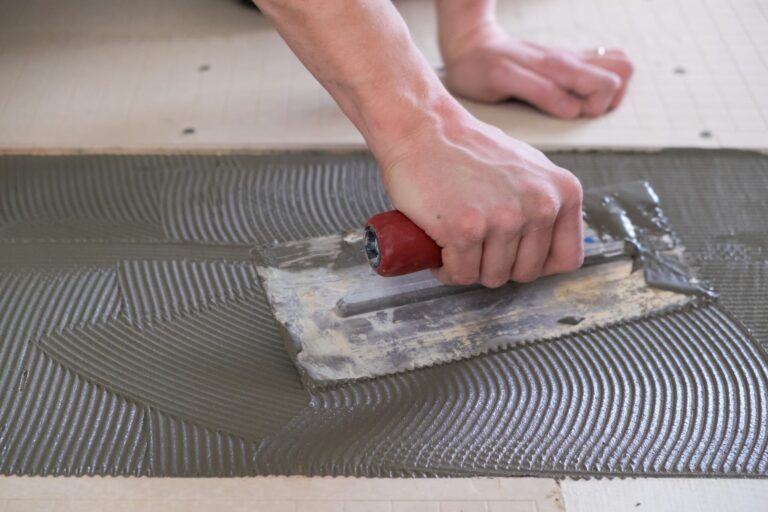
Step 4: Mix Mortar and Apply to Subfloor
Mix the Mortar
Begin by following the instructions on the thinset mortar package to mix it. Use a clean bucket and a drill with a mixing paddle to get it smooth without lumps. Let it sit for a few minutes, then stir again before using.
Spread the Mortar
With a notched trowel, spread the mortar evenly over a small part of the floor. Hold the trowel at 45 degrees to make even ridges. These ridges help the tile stick well and ensure it’s level.
Work in Small Sections
Only cover a small area that you can tile in about 10–15 minutes. This stops the mortar from drying out before you place the tiles.
Pro Tip:
Put a thin mortar layer on the back of larger tiles for better sticking, especially for tiles bigger than 12 inches.

Step 5: Lay the First Tiles
Starting well will help your whole project go smoothly.
Start at the Center
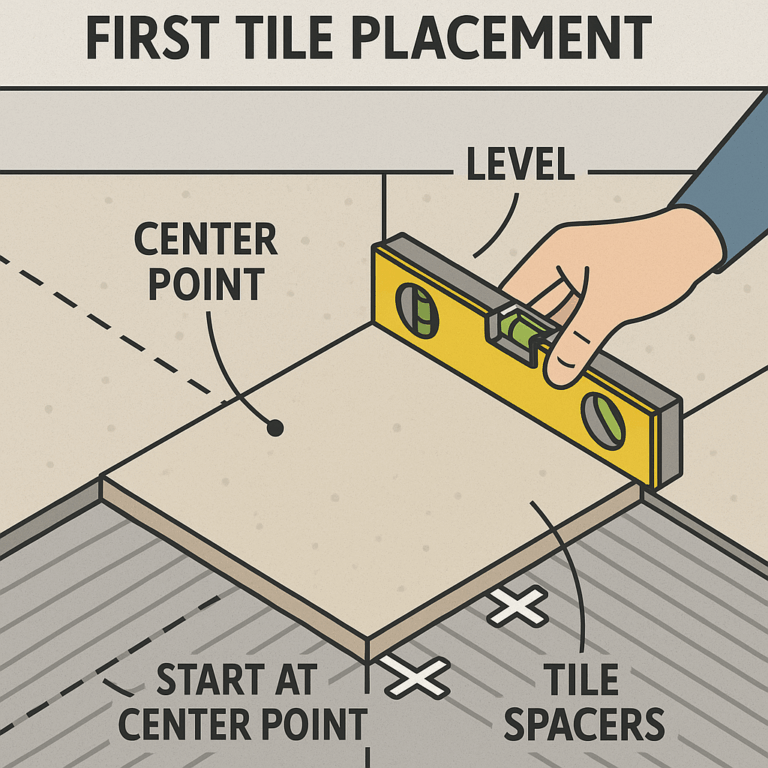
Use chalk lines to begin at the room’s center or your main point. This way, tiles are spread out evenly.
Lay the First Tile
Put the first tile in the mortar. Press it firmly and twist it a little to make it stick.
Use Spacers
Put spacers between tiles to keep gaps even for grout. This gives a neat finish.
Check for Level
After placing some tiles, use a level to make sure the surface is even. Adjust if needed before the mortar dries.
Pro Tip:
Work in small areas to keep the mortar from drying before you set the tiles!
Step 6: Cutting Tiles to Fit
Cutting tiles accurately makes them look neat and professional.
Measure and Mark
Use a tape measure to find the size of the tile piece you need. Mark the line to cut with a pencil or wax pencil.
Choose the Right Tool
For straight cuts, a manual tile cutter is good.
For curved or intricate cuts, use a wet saw or an angle grinder with a diamond blade.
Cut in a Safe Area
Always cut outdoors or in a place with good airflow to avoid dust. Wear safety glasses and gloves to stay safe.
Pro Tip:
Measure twice before cutting to save materials and get the perfect fit!
Step 7: Install Remaining Tiles and Let Mortar Cure
Start by setting the first tiles, then lay the rest one row at a time. Begin at your starting spot and place each tile with spacers to keep grout lines even. Make sure tiles are level and adjust if needed to avoid uneven surfaces.
As you work, do not step on the new tiles to keep them from moving. Work in small sections to ensure the mortar stays wet until all tiles are placed.
Once all tiles are in place, let the mortar cure for at least 24 hours (or follow the manufacturer’s advice) before you start grouting. Proper curing is important for a strong and long-lasting tile floor.
Step 8: Apply Grout
After the mortar is dry, you can grout the spaces between the tiles:
Mix the Grout
Mix the grout until it’s smooth like peanut butter, following the instructions.Spread Grout Using a Float
Hold a rubber grout float at a 45° angle and spread the grout over the tiles. Press down to fill all the spaces well.Remove Excess Grout
After filling, hold the float steeply and scrape off extra grout from the tiles.Clean the Tiles with a Damp Sponge
Wait 10 to 15 minutes, then gently clean the tile surfaces with a damp sponge. Rinse the sponge often and keep the grout in the spaces.Final Buffing
When the grout starts to haze (after 30–60 minutes), buff the surface with a dry microfiber cloth to clear the haze.

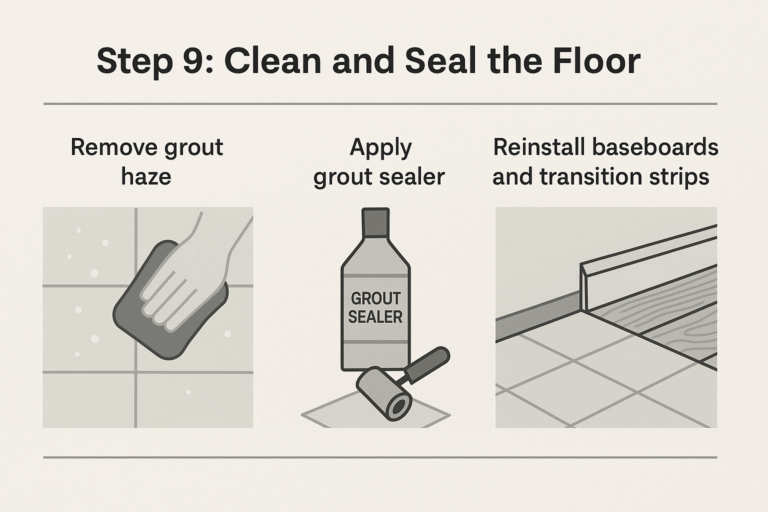
Step 9: Clean and Seal the Floor
Remove Grout Haze
After the grout dries (usually 1 to 2 days), a hazy film may appear on the tiles. Use a damp sponge or a grout haze remover to clean the tiles gently. Be careful around the grout lines.
Apply Grout Sealer
If the grout maker suggests it, put on a grout sealer to protect against moisture, stains, and mold. Use a small brush or a sealer bottle with a roller tip for accuracy. Let the sealer dry completely as per the instructions.
Reinstall Baseboards and Transition Strips
After cleaning and drying, put back the baseboards and add transition strips between different floors or rooms. This gives your tile floor a neat, finished look.
DIY vs. Professional Tile Installation
Installing tile flooring yourself can save money, but it’s not always the best choice. Here’s how to decide if DIY or hiring a pro works for you.
DIY Pros
- Lower upfront cost
- Work at your own pace
- Good for small rooms (bathrooms, laundry rooms)
DIY Cons
- Needs time, precision, and special tools
- Mistakes can be expensive to fix
- Hard for big or complex spaces
Professional Installation Pros
- Expert work and lasting results
- Quick finish, especially in big areas
- Includes prep, cutting, and cleanup
- Often comes with warranties
Professional Installation Cons
- Higher upfront cost
- Less control over timing
Cost Comparison
Here’s what you might pay:
| Installation Type | Average Cost per Sq Ft | Typical Total for 250 Sq Ft |
|---|---|---|
| DIY Installation | $2 – $8 (materials + rental tools) | $500 – $2,000 |
| Professional Installation | $8 – $25 | $2,000 – $6,250 |
👉 For more details, see our Tile Flooring Cost Guide.
Pro Tips for a Successful Tile Flooring Installation
Get great results for your DIY tile project with these tips:
- Save time by organizing tools and tiles first. Keep everything close to you.
- Use a good wet saw to make clean cuts, especially on porcelain.
- Mix small amounts of mortar and grout. This stops them from drying too soon.
- Check if it’s level often using a spirit level while laying tiles.
- Work in small areas. This keeps the mortar from drying before placing tiles.
- Reduce breakage. Cut tiles slowly and wear safety glasses.
Common Mistakes to Avoid When Installing Tile Flooring
Even skilled DIYers can make these mistakes:
- Skipping subfloor leveling. Uneven subfloors can crack tiles and make lines uneven.
- Forgetting spacers. Uneven grout lines can look unprofessional.
- Walking on tiles before the mortar sets. This can shift tiles and mess up alignment.
- Using too much or too little mortar. This can lead to poor adhesion or uneven tiles.
- Not cleaning grout haze quickly. If left too long, it becomes hard to remove.
Do You Need Professional Help With Your Tile Flooring Installation Project?
Now that you know how to install tile flooring step-by-step, you’re ready to make a strong, beautiful floor that lasts for years. If you want experts to do the detailed work like leveling and grouting, we can help.
Our skilled flooring installation team can take care of everything — from preparing the subfloor to laying and sealing each tile — for a perfect, long-lasting finish. We’ll assist you in choosing the best tile style and materials for your needs and budget.
Contact us today to schedule your free in-home consultation and see if we serve your area!


